


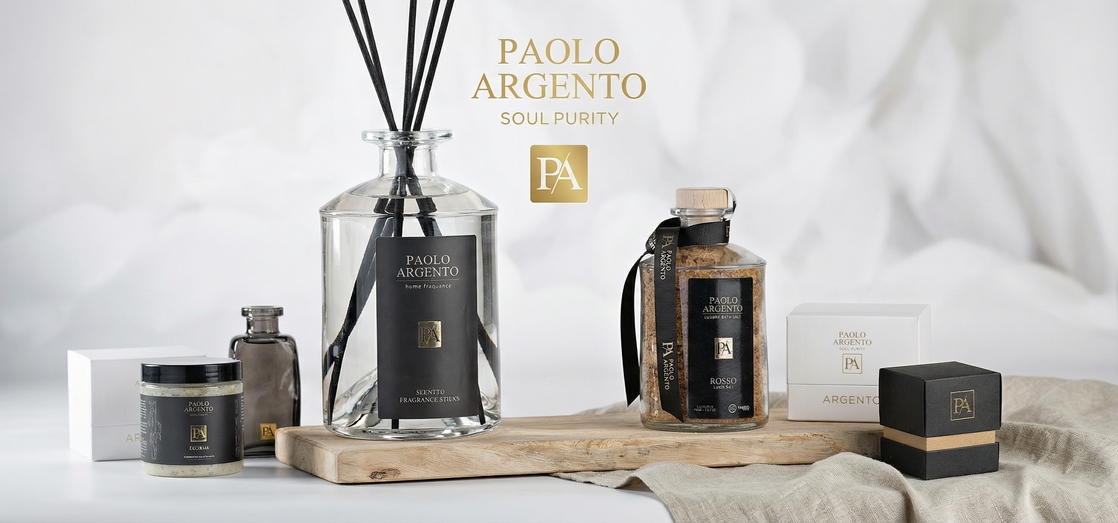
From Polish salt mines to the Dead Sea – salt has many different faces ✨
Bath salt may seem simple: warm water, a handful of crystals and a quiet moment for yourself. In reality, this seemingly simple product opens the door to a diverse world of natural salts, minerals, clays, plant oils and fragrances.
At Paolo Argento®, we create two distinct groups of bath products: bath salts and Salt Bath Elixirs. Our bath salts include natural salts sourced from the Polish salt mines of Kłodawa and Wieliczka. The Elixirs are more complex compositions in which mineral salts are combined with clays, plant oils, vitamin E and fragrance.
Which should you choose? There is no single answer. First, it is worth understanding what is inside and why it is there.
Polish salt from Kłodawa and Wieliczka 🇵🇱
When creating Paolo Argento® bath salts, we do not need to search for interesting raw materials on the other side of the world. Poland has a centuries-old tradition of salt mining, and Kłodawa and Wieliczka are among the country's best-known places associated with this natural resource.
Kłodawa rock salt is a natural raw material extracted from salt deposits. Its main component is sodium chloride, while natural rock salt also contains smaller amounts of other mineral constituents. Its appearance and exact composition can vary depending on the deposit and type of salt.
Wieliczka, meanwhile, is inseparably connected with the history of Polish salt and natural salt deposits. Using Polish raw materials allows us to create products whose story begins much closer to home than one might expect.
What does salt bring to a bath? 🛁
When bath salt is added to warm water, the crystals gradually dissolve, creating a mineral salt bath. The ritual combines the warmth of the water with contact between the skin and the mineral solution and can become an enjoyable part of an evening skincare routine.
In a bath cosmetic, however, the salt itself is only part of the story. What is added to the salt is also important. Plant oils can act as emollients and help leave the skin softer and smoother, clays are valued in cosmetics for their adsorbing properties, and vitamin E is a widely used cosmetic antioxidant.
Paolo Argento® bath salts – more than salt crystals 🌿
Our bath salts are not simply one formula offered in several fragrances. Individual products have different textures, additional ingredients and characteristics. The collection includes crystals, finer salts and bath powders.
A good example is OUD – a natural magnesium-potassium rock salt enriched with jojoba oil and vitamin E. Jojoba is valued in cosmetics for its emollient properties and helps soften and smooth the surface of the skin.
ROSE, on the other hand, comes in the form of rock salt crystals. It is enriched with botanical additions, including rose petals and lavender, while rose, patchouli and musk create its fragrance character. Here, the appearance of the product becomes part of the bathing ritual itself.
GLOW – when salt meets red clay and almond oil ✨
GLOW shows how much can be built around a salt base. It is a fine bath powder enriched with red clay, sweet almond oil, vitamin E and natural mica.
Red clay is a mineral raw material used in cleansing and skincare cosmetics. Clays are valued, among other things, for their ability to adsorb substances from the surface of the skin. Sweet almond oil acts as an emollient, helping to soften and smooth the skin, while natural mica provides a subtle luminous effect.
FLORAL – salt in the form of a delicate bath powder 🌸
FLORAL also comes in the form of a fine bath powder. It contains sweet almond oil, vitamin E and natural mica, while oriental flowers, citrus notes and botanical additions create its distinctive character.
In this case, salt does not have to take the form of large, visible crystals. The fine texture blends easily with water, while the oil and other ingredients add an additional skincare and sensory dimension to the bath.
What are Salt Bath Elixirs? 🌊
Paolo Argento® Salt Bath Elixirs follow a different concept. The aim is to create a more complex blend in which selected mineral salts work together with a higher proportion of clay, plant oils, vitamin E and additional ingredients chosen for each formula.
The range uses, among other ingredients, mineral salts originating from the Dead Sea. The Dead Sea is characterised by an exceptionally high concentration of dissolved salts and a distinctive mineral profile, which is why materials derived from it have long been used in cosmetics and bath products.
Why is Dead Sea salt valued in skincare?
Dead Sea salt differs from typical rock salt in its mineral profile. Magnesium compounds are particularly significant. Research involving magnesium-rich Dead Sea salt solutions suggests that such baths may support hydration of the outer layer of the skin and skin barrier function.
This does not mean that a cosmetic Salt Bath Elixir is a medicinal product. In Paolo Argento® Elixirs, minerals are part of a cosmetic formula designed for a skincare and sensory bathing ritual.
Clay – skincare ingredient and source of natural colour 🎨
One of the most characteristic features of Salt Bath Elixirs is the higher proportion of natural clays in their formulas. Clay is not simply a decorative addition. It influences the character, texture and colour of the cosmetic product.
Clays are natural mineral materials used in cosmetics, among other reasons, for their adsorbing properties. Individual types differ in their mineral composition and natural colour.
– white clay gives the mixture a light, creamy appearance
– pink clay creates a subtle pink shade
– yellow clay provides a warm mineral tone
– darker clays give products deeper, more intense shades
The colour of a Salt Bath Elixir can therefore be directly related to its formula and the type of clay used. It is not merely an aesthetic feature – the colour can be a visible sign of the mineral ingredients inside the product.
Why are plant oils used in the Elixirs? 🌿
Another important part of the formulas is plant oils. Depending on the variant, ingredients include sweet almond oil, jojoba oil and argan oil. Their purpose is to complement the mineral character of the bath with emollient skincare.
Sweet almond oil helps soften and smooth the skin. Jojoba is valued in cosmetics for its emollient properties and its contribution to skin comfort. Argan oil provides lipids and is widely used in cosmetic products designed to soften, smooth and condition the skin.
The formulas also use vitamin E, a well-known cosmetic ingredient with antioxidant properties.
Salt, clay and oil – three ingredients, three different roles
The combination of different raw materials is one of the most interesting aspects of more complex bath formulas. Each group of ingredients plays a different role.
– salt creates the mineral base of the bath
– clay contributes minerals, adsorbing properties and natural colour
– plant oil acts as an emollient and helps soften and smooth the skin
– vitamin E complements the formula as an antioxidant ingredient
– fragrance composition creates the sensory character of the entire ritual
Bath salt or Salt Bath Elixir – which should you choose?
These products should not simply be viewed as a basic and a more luxurious version of the same cosmetic. They represent two different ways of creating a bathing ritual.
Choose bath salts if you are interested in Polish raw materials from Kłodawa and Wieliczka, different salt textures, crystals or powders and formulas enriched with selected additional ingredients.
Choose a Salt Bath Elixir if you are looking for a more complex combination of mineral salts, a higher proportion of clay, plant oil, vitamin E and fragrance in a single formula.
Can the colour of bath salt tell you something about its ingredients?
Sometimes it can. Natural rock salt may vary in colour due to the presence of different mineral constituents. In products enriched with clays, the colour can become even more distinctive and may result directly from the type of clay used.
This means that the appearance of Paolo Argento® bath products does not have to be accidental. Pink, red, warm yellow or deeper mineral shades can tell part of the story of the ingredients inside the package.
How should bath salts be used?
Each formula may have slightly different directions for use, so the instructions provided on the individual product packaging should always be followed. For some Paolo Argento® bath salts, approximately 180–200 g of product is recommended under a stream of warm water.
Do not increase the amount simply because you assume that a more concentrated bath will always be better. Products containing clays, oils and fragrance compositions should be used according to the instructions provided with the specific cosmetic.
From Kłodawa and Wieliczka to the Dead Sea – discover the many faces of salt ✨
At Paolo Argento®, we see salt not as a single ingredient but as a starting point for creating different bathing rituals. On one side are Polish salts from Kłodawa and Wieliczka; on the other are mineral ingredients from the Dead Sea used in more complex Salt Bath Elixirs.
Add to this natural clays, plant oils, vitamin E, botanical additions, natural mica and fragrance compositions, and every formula develops its own character. So when choosing a bath product, look beyond fragrance and colour. Read the ingredients – the most interesting story is often hidden in the formula itself.