


A small piece of scented wax, a ceramic warmer and gentle heat. After a while, fragrance begins to fill the room. Yet after several uses, something curious happens: the wax is still in the dish, but its aroma has become much weaker. Why?
The answer lies in the physical properties of wax and fragrance materials. Although they form one product, they behave differently when heated. Understanding this process helps us appreciate how wax warmers work and how to use scented wax melts effectively.
What is actually inside a scented wax melt?
A scented wax melt combines a wax base with a fragrance composition. The base gives the product its solid form at room temperature, while the fragrance ingredients provide the aroma released during heating.
At first glance, they appear to form a single uniform material. However, the individual ingredients have different physical properties, including different levels of volatility. This difference is central to what happens inside a wax warmer.
Stage one – the wax begins to melt
When a piece of wax is placed in the warmer's dish and heated, its temperature gradually rises. Once it reaches the appropriate temperature, the wax changes from a solid into a liquid.
This process is called melting. The wax changes its physical state, but this does not mean it disappears or is consumed in the same way as wax in a burning candle.
In a correctly used wax warmer, the wax is not burned. Instead, it forms a heated base from which fragrance materials are released.
Stage two – fragrance enters the air
Heat encourages volatile fragrance ingredients to move into the surrounding air. This process is called evaporation. It does not require a liquid to boil; evaporation also occurs at temperatures well below a substance's boiling point.
Fragrance molecules spread through the room, and when they reach our noses, we perceive them as a particular scent.
Higher temperatures may accelerate the release of many fragrance ingredients. However, stronger heating is not necessarily better. Excessive temperatures may change the character of the fragrance and cause it to fade more quickly.
Why does the wax remain when the fragrance fades?
This is the key difference between the wax base and the fragrance composition. Under typical warmer operating conditions, much of the wax base remains in the dish, while more volatile fragrance ingredients gradually escape into the air.
As a result, after several heating sessions, almost the same visible amount of wax may remain even though its fragrance is considerably weaker.
The presence of wax in the dish does not necessarily mean that enough fragrance ingredients remain to produce the same intensity as during the first use.
Do all fragrance notes evaporate at the same time?
Fragrance compositions contain numerous ingredients with different properties. Some are more volatile, while others remain in the heated wax for longer. Consequently, the proportions of individual fragrance ingredients can change over repeated uses.
In perfumery, we often describe compositions using top notes, middle notes and base notes. These categories help explain how a fragrance develops, although they do not mean that every ingredient in one group evaporates at exactly the same rate.
This is why the character of a scented wax melt may change over time. Some accents become less noticeable, while others may stand out more clearly.
Can the wax become solid again?
Yes. When an electric warmer is switched off or the heat source beneath a tealight warmer goes out, the temperature gradually falls. The wax cools and becomes solid again.
This process is called solidification, the reverse of melting. It can happen repeatedly. However, each heating session may release more of the fragrance ingredients that remain.
The wax may therefore look almost unchanged, even though its fragrance composition is no longer identical to that of the unused product.
How do you know when to replace a wax melt?
The simplest indication is a noticeable reduction in fragrance during another heating session. If the wax melts normally but the aroma is very faint or practically absent, a significant proportion of the volatile fragrance ingredients may already have been released.
It is also worth remembering olfactory adaptation. When we remain in the same room for a long time, our sense of smell may become accustomed to the fragrance. Before deciding that the wax has lost its aroma entirely, it can help to assess it again after a short break from exposure.
How should used wax be removed safely?
Before replacing the wax, switch off the warmer or extinguish the tealight and follow the appliance manufacturer's instructions. Never move the warmer or touch the hot dish or liquid wax.
Once completely cool, the wax can be removed using a method recommended by the warmer manufacturer. Do not pour wax into a sink or drain, as it can solidify again and contribute to blockages.
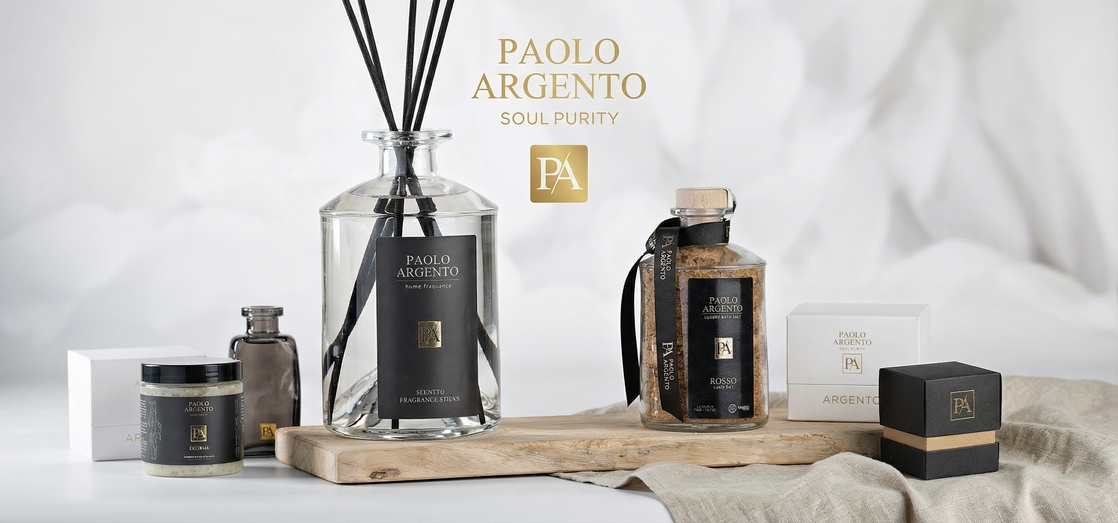
Paolo Argento® scented wax melts – small in size, rich in possibilities
Scented wax melts offer an interesting way to explore fragrance compositions. They introduce aroma into a room without the need to burn a scented candle, and their small format makes it easy to change fragrances according to mood or time of day.
The Paolo Argento® collection includes fresh and fruity compositions such as AZZURRO, floral accents such as ROSE, and deeper, more distinctive fragrances such as NERO and OUD.
Each composition may develop a little differently when heated. Discovering these fragrances at your own pace can be part of the pleasure of creating a welcoming atmosphere at home.
A small lesson in physics hidden in fragrance
A wax warmer reveals how fascinating physical processes can be part of everyday rituals. Melting, evaporation and solidification occur each time we use a warmer.
The wax remains because, under normal heating conditions, it does not disappear as quickly as the fragrance materials released from it. That is why a piece of wax may look almost unchanged even after its fragrance has told its story.